
Depression Symptoms: Complete Guide to Signs, Types & Treatment

Depression is more than sadness. It is a medical condition that affects how you think, feel, sleep, eat, and function — and it can look different in every person. Some people cry constantly. Others feel nothing at all. Some can't get out of bed. Others go to work every day, smiling through it.
If you are searching for answers about depression symptoms — for yourself or someone you love — this guide covers the full picture: emotional, physical, cognitive, and behavioral signs; how depression differs by age and gender; when symptoms cross the line into a diagnosis; and what treatment actually looks like. The information below is based on clinical guidelines from the DSM-5, World Health Organization, Mayo Clinic, and NHS.
📋 What You Will Learn
- The four categories of depression symptoms — emotional, physical, cognitive, and behavioral
- How many symptoms are needed for a diagnosis (and how long they must last)
- How depression symptoms differ in men, women, teens, and older adults
- What atypical, seasonal, and postpartum depression look like
- When to seek professional help — and what treatment involves
Not sure if what you are feeling is depression?
Our admissions team is available 24/7 to answer questions, verify insurance, and help you find the right level of care — nationwide.
📞 Call (888) 240-2548 — Confidential & FreeWhat Is Depression?
Depression (also called major depressive disorder or clinical depression) is a mood disorder characterized by persistent sadness, emptiness, or irritability that lasts for at least two weeks and interferes with daily functioning. It is not a weakness, a character flaw, or something you can "snap out of." It is a medical condition with biological, psychological, and environmental causes.
Depression affects an estimated 280 million people worldwide, according to the World Health Organization. In the United States, about 21 million adults — roughly 8.4% of the population — experience at least one major depressive episode each year.
What makes depression tricky is that it does not look the same in everyone. A teenager might be irritable and withdrawn. A man might be angry and drinking more. An older adult might complain of physical pain and fatigue. A new mother might feel numb and guilty. All of these are depression — just different faces of it.
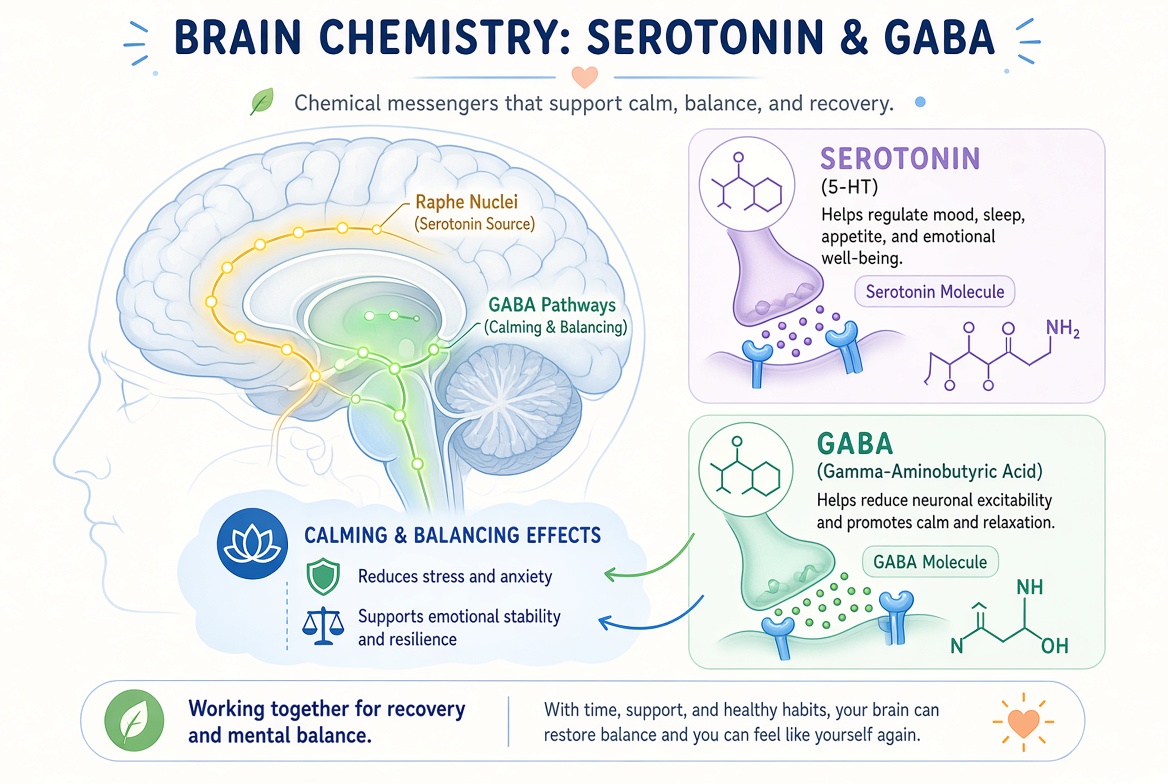
Emotional Symptoms of Depression
Emotional symptoms are the ones most people associate with depression — but they are not always obvious. Some people experience profound sadness. Others feel empty, numb, or flat. Both are valid.
| Category | Symptoms |
|---|---|
| Core Emotional Signs | Persistent sadness or low mood; emptiness or numbness; irritability or anger; anhedonia (loss of interest or pleasure); feelings of worthlessness or guilt; hopelessness about the future |
| What It Feels Like | "I feel nothing" · "Everything feels heavy" · "I don't enjoy anything anymore" · "I'm a burden to everyone" · "Nothing will ever get better" |
| Less Obvious Signs | Crying without knowing why; feeling detached from loved ones; rage over small things; emotional numbness after trauma; feeling "empty" rather than sad |
Anhedonia: The Symptom Most People Miss
Anhedonia — the inability to feel pleasure from things you used to enjoy — is one of the two core symptoms required for a depression diagnosis (along with depressed mood). It is often the symptom that people describe as "I just don't care about anything anymore." Hobbies feel pointless. Food tastes bland. Time with friends feels like a chore. If this sounds familiar, it is not laziness — it is a clinical symptom.
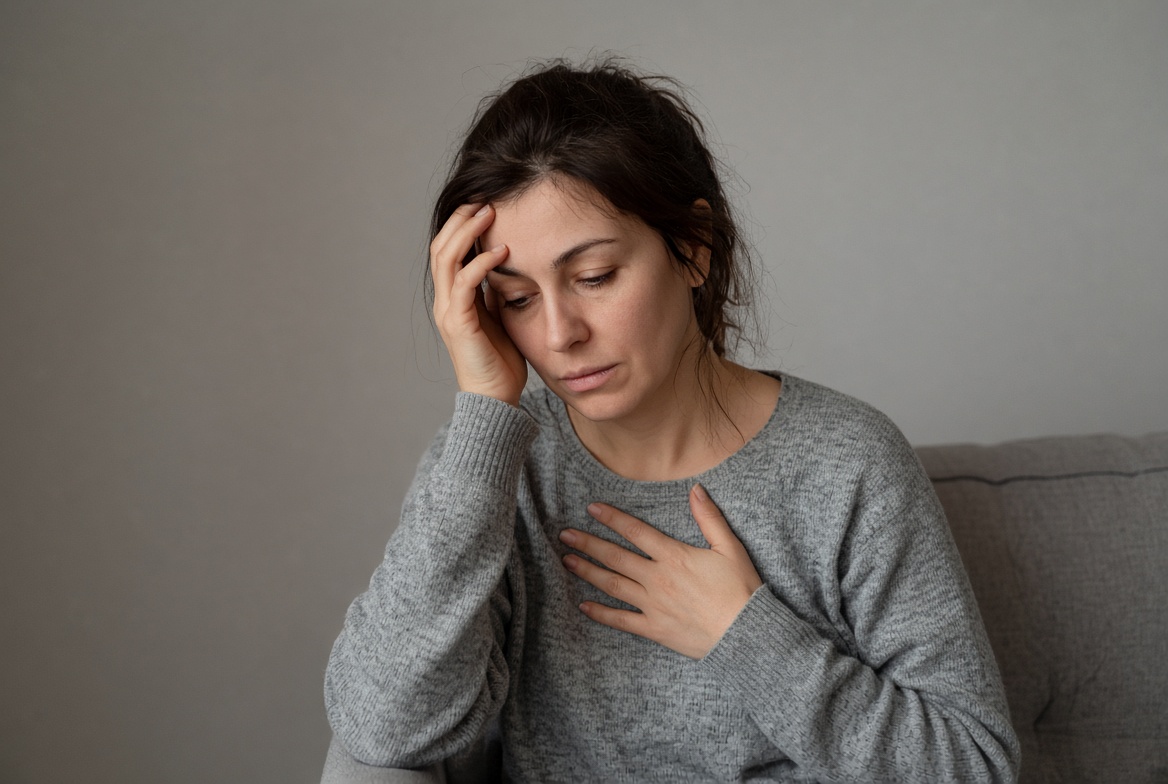
Physical Symptoms of Depression
Depression is not "all in your head." It has real, measurable physical effects. Many people visit their doctor for headaches, fatigue, or digestive issues before they realize they are depressed — and some doctors miss it too.
| Category | Symptoms |
|---|---|
| Sleep & Energy | Insomnia (trouble falling or staying asleep); hypersomnia (sleeping too much); waking up early and unable to fall back asleep; chronic fatigue despite rest; feeling heavy or slowed down |
| Body & Appetite | Changes in appetite (eating too much or too little); unexplained weight loss or gain; headaches or migraines; body aches and pain; digestive problems (nausea, constipation, diarrhea) |
| Movement & Tension | Psychomotor agitation (restlessness, pacing); psychomotor retardation (slowed speech and movement); muscle tension; chest tightness; leaden paralysis (heavy arms or legs) |
Why Physical Symptoms Matter
In many cultures and age groups — especially in older adults and in some Asian communities — depression is expressed primarily through physical complaints rather than emotional ones. This is called "somatic presentation." If you are experiencing unexplained physical symptoms and your doctor has ruled out other causes, depression should be on the list.
Cognitive Symptoms of Depression
Depression affects how you think — not just how you feel. Cognitive symptoms are often the ones that make work, school, and relationships hardest to manage.
| Category | Symptoms |
|---|---|
| Concentration & Memory | Difficulty concentrating; trouble making decisions; forgetfulness; "brain fog"; losing track of conversations |
| Thought Patterns | Negative self-talk; excessive guilt or self-blame; rumination (replaying the same thoughts); catastrophizing; difficulty seeing positive outcomes |
| Severe Cognitive Signs | Psychosis (hallucinations or delusions); suicidal ideation; feeling disconnected from reality; severe indecision; memory problems that mimic dementia |
Depression vs. Dementia
In older adults, severe depression can cause memory and concentration problems that look like early dementia — a condition sometimes called "pseudodementia." The key difference: in depression-related cognitive impairment, the person often complains about their memory and may say "I don't know" to questions. In true dementia, the person may not notice the deficits and will often confabulate (make up answers). This distinction matters because depression-related cognitive symptoms often improve with treatment.
Behavioral Symptoms of Depression
Behavioral symptoms are what other people notice — even when the person themselves may not recognize they are depressed.
| Category | Symptoms |
|---|---|
| Withdrawal & Avoidance | Social isolation; canceling plans repeatedly; avoiding phone calls and messages; staying in bed all day; neglecting responsibilities |
| Self-Care & Daily Life | Poor hygiene (not showering, not changing clothes); not eating or eating compulsively; messy living space; neglecting children or pets; missing work or school |
| Coping Behaviors | Increased alcohol or drug use; reckless behavior; self-harm; excessive screen time; sleeping to escape |
How Many Symptoms Are Needed for a Diagnosis?
According to the DSM-5 (Diagnostic and Statistical Manual of Mental Disorders, 5th Edition), a diagnosis of major depressive disorder requires five or more symptoms during the same two-week period, and at least one of them must be either:
- Depressed mood (feeling sad, empty, or hopeless), or
- Loss of interest or pleasure (anhedonia)
The other symptoms can include changes in appetite or weight, sleep problems, psychomotor changes, fatigue, feelings of worthlessness or guilt, difficulty concentrating, and recurrent thoughts of death or suicide. Symptoms must cause significant distress or impairment in social, occupational, or other important areas of functioning.
| Depression Type | Key Symptom Pattern | Duration |
|---|---|---|
| Major Depressive Disorder | 5+ symptoms including depressed mood or anhedonia | At least 2 weeks |
| Persistent Depressive Disorder (Dysthymia) | Depressed mood plus 2+ other symptoms | At least 2 years |
| Seasonal Affective Disorder | Depression symptoms tied to seasonal changes | Typically winter months |
| Postpartum Depression | Depression symptoms after childbirth | Can begin during pregnancy or within 4 weeks after birth |
| Atypical Depression | Mood reactivity, increased appetite, hypersomnia, leaden paralysis | Varies |
Depression symptoms vary by age and gender — the same condition can look very different from person to person.
How Depression Symptoms Differ by Group
Depression looks different depending on who you are. Recognizing those differences is critical — both for self-awareness and for getting an accurate diagnosis.
Depression Symptoms in Men
Men with depression are less likely to say "I feel sad" and more likely to show:
- Irritability and anger — snapping at loved ones, road rage, getting into fights
- Reckless behavior — driving dangerously, unsafe sex, gambling
- Increased substance use — drinking more, using drugs to cope
- Withdrawal from relationships — pulling away from family and friends
- Physical complaints — headaches, back pain, digestive issues
- Working excessively — using work as an escape
Because these symptoms don't look like "classic" depression, many men go undiagnosed. In fact, men are less likely to seek help for depression than women — but are more likely to die by suicide.
Depression Symptoms in Women
Women are about twice as likely as men to be diagnosed with depression. Symptoms often include:
- Persistent sadness — crying frequently, feeling empty
- Guilt and self-blame — feeling like a bad mother, partner, or friend
- Sleep disturbances — trouble falling asleep, staying asleep, or sleeping too much
- Appetite changes — eating too much or too little
- Somatic symptoms — headaches, fatigue, body aches
- Hormonal links — depression often co-occurs with PMS, perimenopause, and postpartum periods
Teen Depression Symptoms
Teen depression does not always look like adult depression. Watch for:
- Irritability and anger — more common than sadness in teens
- Withdrawal from family and friends
- Declining grades — a sudden drop in academic performance
- Loss of interest in hobbies and activities
- Sleep changes — sleeping all day or not sleeping at all
- Physical complaints — headaches, stomachaches
- Self-harm or risky behavior
Teen depression is often missed because parents and teachers mistake it for "normal teenage moodiness." But when symptoms last more than two weeks and interfere with school, friendships, or family life, it is time to seek help.
Depression Symptoms in Older Adults
Depression in older adults is often overlooked — and sometimes misdiagnosed as dementia. Signs to watch for:
- Physical complaints — pain, fatigue, digestive issues
- Memory problems — difficulty concentrating, forgetting things
- Social withdrawal — not wanting to leave the house
- Loss of interest — not enjoying hobbies, grandchildren, or social events
- Sleep problems — waking early, trouble falling asleep
- Neglecting self-care — not eating, not taking medications
Postpartum Depression Symptoms
Postpartum depression affects about 1 in 8 women after childbirth — and can also affect fathers. Symptoms include persistent sadness, crying spells, difficulty bonding with the baby, guilt, sleep problems (even when the baby sleeps), and in severe cases, thoughts of harming oneself or the baby. It is not the "baby blues" (which resolve within two weeks). Postpartum depression requires treatment.
Atypical & Lesser-Known Depression Symptoms
Not all depression fits the textbook picture. Atypical depression and other subtypes have distinct symptom patterns that are often missed.
| Subtype | Distinct Symptoms |
|---|---|
| Atypical Depression | Mood brightens in response to positive events; increased appetite and weight gain; excessive sleep (hypersomnia); leaden paralysis (heavy arms/legs); extreme sensitivity to rejection |
| Seasonal Depression | Depression symptoms tied to seasons (usually winter); low energy and fatigue; increased sleep and appetite; carbohydrate cravings; social withdrawal |
| Psychotic Depression | Hallucinations (seeing or hearing things); delusions (false beliefs); paranoia; severe agitation; requires immediate medical attention |
Depression is highly treatable. Most people improve significantly with therapy, medication, lifestyle changes, or a combination.
When and How to Seek Help
Depression is highly treatable — but only if you reach out. The earlier you get help, the faster you can feel better. Here is when to seek professional help:
- Symptoms last more than two weeks
- Symptoms interfere with work, school, or relationships
- You are using alcohol or drugs to cope
- You have thoughts of self-harm or suicide
- You feel hopeless or trapped
If You Are in Crisis
If you are having thoughts of suicide or self-harm, call or text 988 (Suicide & Crisis Lifeline) or go to your nearest emergency room. You are not alone, and help is available right now.
Treatment for depression typically includes one or more of the following:
- Therapy — Cognitive Behavioral Therapy (CBT), Dialectical Behavior Therapy (DBT), and psychodynamic therapy are all evidence-based for depression.
- Medication — SSRIs, SNRIs, and atypical antidepressants can reduce symptoms. Medication is often most effective when combined with therapy.
- Lifestyle changes — Exercise, sleep hygiene, nutrition, and social connection all support recovery.
- Dual-diagnosis treatment — If depression co-occurs with substance use, integrated treatment is essential. Treating one without the other rarely works.
If you are looking for a treatment program that addresses both depression and addiction, Hudson Valley Rehab provides comprehensive care. We also offer specialized alcohol withdrawal treatment yonkers ny through our affiliated center. Wherever you are — in any state — we can help you find the right level of care.
What We Offer
- Medical Detox — 24/7 supervised withdrawal management
- Inpatient Rehab — Residential treatment for 28+ days
- Intensive Outpatient Program (IOP) — Structured therapy while living at home
- Dual-Diagnosis Care — Integrated treatment for co-occurring mental health conditions
- Aftercare & Alumni Support — Ongoing recovery support
You do not have to figure this out alone.
If you or someone you love is struggling with depression — or with depression and addiction together — our admissions team is available 24/7 to help. Nationwide. Confidential. Free.
📞 Call (888) 240-2548 — Confidential & FreeFrequently Asked Questions About Depression Symptoms
What are the most common symptoms of depression?
The most common symptoms of depression are persistent sadness, loss of interest in activities once enjoyed (anhedonia), fatigue, sleep disturbances, changes in appetite, difficulty concentrating, feelings of worthlessness or guilt, and in severe cases, thoughts of self-harm. For a diagnosis, symptoms must last at least two weeks and interfere with daily functioning.
How long do depression symptoms need to last for a diagnosis?
According to the DSM-5, depression symptoms must be present for at least two weeks and represent a change from previous functioning. One of the symptoms must be either depressed mood or loss of interest/pleasure.
What are the physical symptoms of depression?
Physical symptoms of depression include chronic fatigue, headaches, body aches, digestive issues, changes in appetite or weight, insomnia or hypersomnia, psychomotor agitation or retardation, and unexplained pain. These are real physical manifestations of a mental health condition.
How are depression symptoms different in men and women?
Men with depression often experience irritability, anger, reckless behavior, and substance use rather than overt sadness. Women more commonly report sadness, guilt, sleep disturbances, and somatic symptoms. Both genders can experience all symptoms, but reporting patterns differ.
What are atypical depression symptoms?
Atypical depression symptoms include mood reactivity (mood brightens in response to positive events), increased appetite and weight gain, excessive sleep (hypersomnia), leaden paralysis (heavy feeling in arms and legs), and extreme sensitivity to rejection.
When should I seek professional help for depression symptoms?
Seek professional help if depression symptoms last more than two weeks, interfere with work, relationships, or daily functioning, or include thoughts of self-harm or suicide. If you are in crisis, call 988 (Suicide & Crisis Lifeline) or go to your nearest emergency room.
Can depression symptoms come and go?
Yes. Depression can be episodic — symptoms may improve and then return. This is called recurrent depression. Even if symptoms improve, ongoing treatment and monitoring are important to prevent relapse. Some people also experience "double depression," where persistent low-grade depression (dysthymia) is punctuated by major depressive episodes.
Is depression different from sadness?
Yes. Sadness is a normal emotion that comes and goes in response to life events. Depression is a medical condition that persists for at least two weeks, affects multiple areas of functioning, and includes symptoms beyond sadness — such as anhedonia, sleep changes, fatigue, and cognitive problems. Grief and sadness are normal; depression is a clinical disorder.
If You're Ready to Start Treatment
Depression is treatable, and reaching out is the first step. Whether you are seeking help for yourself or a loved one, our admissions team is available 24/7 to answer questions, verify insurance, and connect you with the right level of care. Nationwide. Confidential. Free.
Depression & Dual-Diagnosis Treatment — Nationwide, 24/7
Hudson Valley Rehab provides trauma-informed care for depression, anxiety, PTSD, and co-occurring substance use. Free insurance verification before you commit to anything.
📞 Call (888) 240-2548 — Confidential 24/7 Nationwide AdmissionsTreatment Options — Nationwide Placement
We work with clients and families across the United States. Whether you need mental health treatment, dual-diagnosis, detox, or rehab, our team will help you find the right level of care — wherever you are.
This article is for informational purposes only and is not a substitute for professional medical advice. If you or someone you know is experiencing depression symptoms, please contact a medical provider. If you are in crisis, call or text 988 (Suicide & Crisis Lifeline) or call our confidential admissions team at (888) 240-2548 — available nationwide, 24/7.